Transport for NSW is carrying out essential maintenance work to the Wymah Ferry. Wymah Ferry will be closed from Monday, 16 February until Wednesday, 18 February 2026.
Consequences was a major exhibition project that explored the far-reaching effects of the First World War on Albury and surrounding communities. It uncovered both the expected and unexpected stories and impacts of the conflict, with a major exhibition at Albury LibraryMuseum and displays at six partner museums. The project was a collaboration between AlburyCity, Greater Hume, Murray Arts and six regional museums: Culcairn Station House Museum, Headlie Taylor Header Museum, Jindera Pioneer Museum, Holbrook Submarine Museum, Woolpack Inn Museum, and Wymah Museum. It was supported by the NSW Government through Create NSW.
Three artists in residence were invited to create new work for the project, responding to the themes and stories from each of the seven sites. The artists in residence were Stephanie Jakovac, Facing Australia (Karen Donnelly, Tony Nott and Raimond de Weerdt) and Dr Treahna Hamm.
Filmmaker Jacqui Schulz, photographer Paul Temple and visual artist Tracie MacVean also contributed to the project. The rich research outcomes were enhanced by the engagement of project curators Bethany Thornber and Andrea Briggs.
Read the unique and fascinating stories uncovered at each site.
There was once a small but thriving community located just 11 km north of Wymah, on the old Albury–Sydney road where Mullengandra Creek joined Twelve Mile Creek. Bowna was a village ofabout 150 people that served local landholders and travellers. You can still see the silt-covered remnants of the homes and bridges of old Bowna today when Lake Hume is very low.
Returning home from battlefield service was a difficult prospect for many veterans of the First World War. However, support from family, friends and social networks helped many to live long and productive lives.
The Riverina town of Holbrook is one of over 90 Australian places to change its name during the First World War because of its German associations.
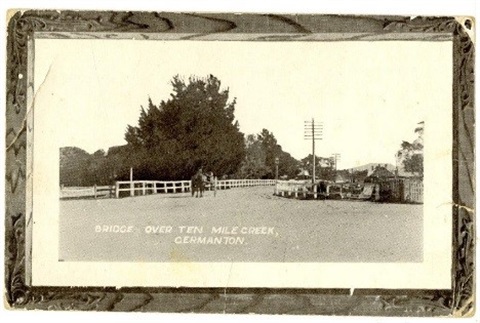
The town of Germanton was renamed Holbrook in 1915. More than 100 years later, a bridge constructed in Holbrook honours the town’s early German roots.
The end of the First World War signalled the beginning of a new series of challenges. But first, there was celebration.
The Royal Australian Navy’s Submarine Squadron was honoured in 1986, and again in 1992, with a formal ceremony awarding the unit Freedom of Entry to the town of Holbrook.
A local Henty farmer’s invention revolutionised the world’s grain industry.
Military nurses were an essential part of the war effort, and their wartime experiences continued to impact them emotionally and professionally throughout the remainder of their lives.
joined with European Australians in fighting in support of the British Empire during the First World War. They served in a range of capacities, mostly in the Australian Imperial Force (AIF), where they were treated equally to their fellow soldiers. Marion Leane Smith, a nurse, is the only Indigenous woman known to have served in that war.
Australia’s railwaymen played an important role in operating railway lines for the Allied war effort in Europe, as well as in fighting on the front line.
Many small regional towns were heavily dependent on the railways for their economic prosperity and growth.
These can be seen at the Wymah Museum.
Just as the war ended, the world faced a new threat. Spanish Influenza would kill more people than had died in the war.